Litchfield Park, AZ
Hot Water Slab Leak in Litchfield Park
Warm floor, heater that never rests: the hot line is the usual suspect.

Hot Water Slab Leaks: The Short Version
A leak on the hot side announces itself differently from a cold-side leak. Here is the short version:
- One warm patch on the floor, often where pets settle, is the classic first clue.
- The water heater runs far more than it should because hot water keeps escaping.
- Thermal imaging and acoustic listening pinpoint the spot so the slab opens in one place.
A hot water slab leak that Litchfield Park homeowners report usually begins with one warm tile and a water heater that never seems to rest. The hot side stays under pressure all day, so even a small opening keeps moving heated water into the slab around the clock.
We connect Litchfield Park callers with experienced local pros who find and fix hot-side leaks without tearing up half the house. Call and describe the warm spot and the heater behavior; you will get a straight answer on what to do next.
Hot Water Leak Under Slab: Why Heat Stresses These Lines
A hot water leak under the slab starts the same way most pipe leaks start, with a weak point in the line giving way under pressure. Heat adds its own stress: hot lines expand and contract with every heating cycle, and that constant movement works on fittings and thin spots more than a cold line ever experiences. Over the years, the combination of pressure, heat cycling and soil movement can open a pinhole that grows into a steady leak.
The signs stay subtle at first because the water escaping is clean supply water, not sewage. There is no smell and no discoloration, just warmth where it should not be and a water heater doing double shifts. That quiet profile is why a hot water leak under slab concrete often runs longer than a cold-side leak before anyone connects the clues.
Not every warm floor is a leak, so compare what you are seeing against the signs of slab leak before assuming the worst. Sun on tile, a heating vent or a recent hot shower can all warm a floor temporarily; a leak keeps one spot warm around the clock.
A Warm Spot on Floor Tile: The Classic Hot-Side Clue
A warm spot on floor tile or stone is the classic first clue: it stays in one place, day after day, and does not cool down the way a sun-warmed patch does by evening. It stays in one place, day after day, and it does not cool down the way a sun-warmed patch does by evening. Many homeowners first hear about it from the family pet, who has quietly claimed the warmest square of flooring in the house.
Thermal imaging turns that feeling into a picture: the camera shows the warm plume spreading from the leak point under the slab, which tells the pro exactly where to listen next. Acoustic equipment then narrows it to the precise spot, often within inches, so any opening in the slab is small and deliberate. This is the find-it-first approach that keeps the repair contained.
Water Heater Always Running Points to the Hot Side
A water heater always running is the second classic sign, and it is really an energy clue wearing a plumbing disguise. When hot water keeps escaping under the slab, cold water keeps refilling the tank, and the heater fires again and again to warm it. Your gas or electric bill climbs alongside the water bill, even though nothing in your routine has changed.
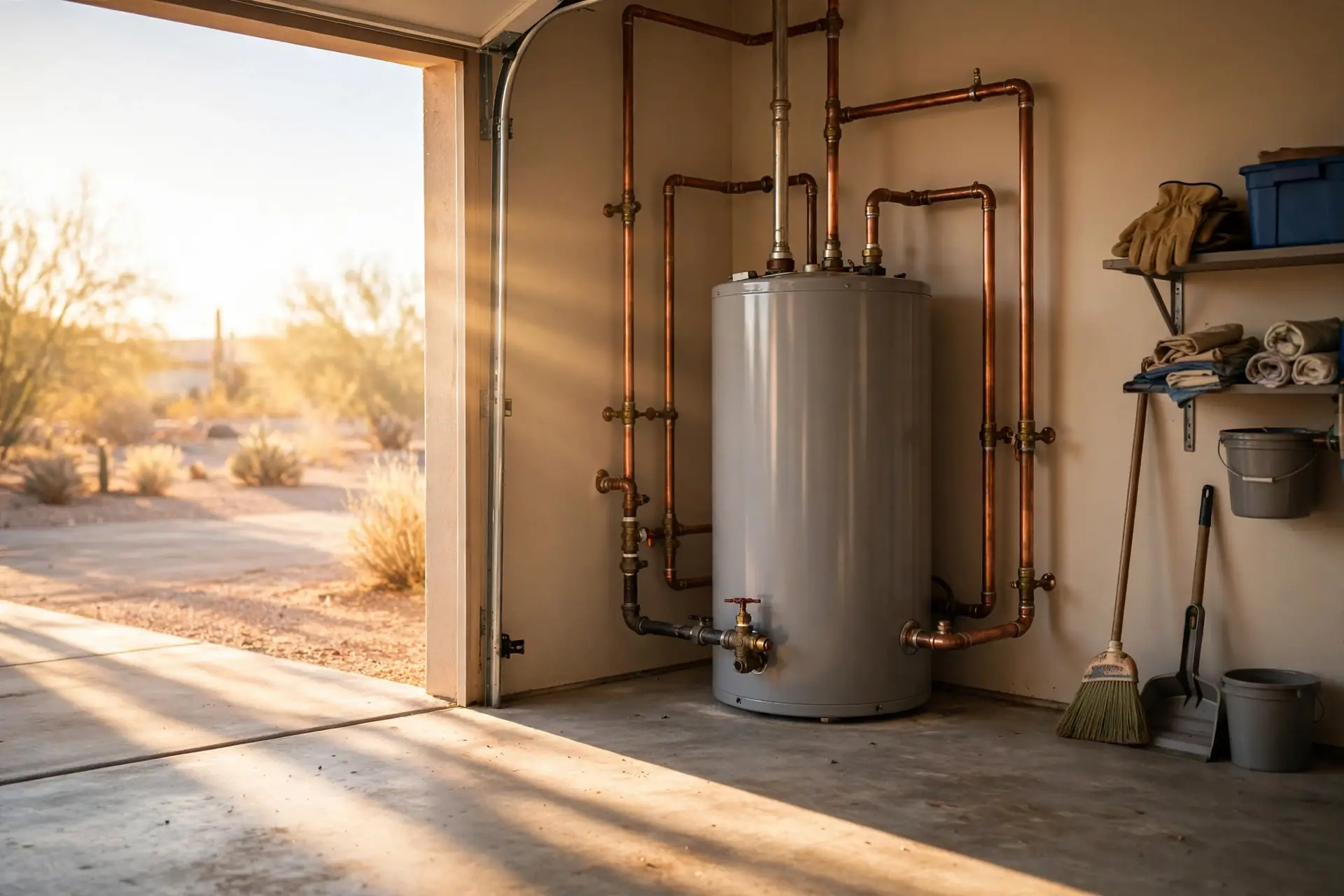
You can do a simple check before the pro arrives: note the meter reading, avoid hot water use for an hour or two, and read it again. If the meter moved and the heater cycled during that quiet window, the hot side is the prime suspect. Share both observations on the call; they help the pro bring the right equipment.
While you wait, turning off the cold-water supply valve at the water heater can slow a hot-side leak, since it stops the tank from feeding the break. Do not touch gas valves, pilot controls or electrical breakers; those stay exactly as they are until a professional looks at them.
Repair Options for a Hot-Side Leak
Once the leak is pinpointed, the fix usually comes down to three choices. A spot repair opens the slab at the marked point and fixes the single section, which suits a first leak in an otherwise sound system. A reroute abandons the leaking under-slab run and carries the hot line through the attic or walls instead, which makes sense when the hot side has leaked before. A full repipe replaces the whole system when the pattern says the pipe itself is done.
The right choice depends on the leak's location, the age and material of your lines, and how many times the hot side has failed already. A good pro lays out the options with their trade-offs and lets you decide; be wary of anyone who prescribes the biggest job before the listening equipment comes out.
Litchfield Park Homes and Hot-Side Leaks
In the original city, 1960s to 1980s ranches carry hot-water lines that have been expanding and contracting under slabs for decades, which is why warm-floor calls skew toward these streets. The single-story layout helps twice over: leaks show up on tile floors you walk daily, and reroutes through the low attic are straightforward when the hot side needs a new path.
The newer subdivisions on the north and south sides have longer hot-water runs serving bigger floor plans, so a hot-side leak can sit farther from the heater before it shows. In these homes the water-heater clue often arrives before the warm spot does, because the heat has more slab to travel through. Hard water and shifting desert soils add background stress to lines of every era, in general ways rather than on any timetable.
If your streets are the older ones near the center, see slab leak repair in Old Litchfield Park; for the newer homes on the north side, slab leak repair in Camelback Road Area has the local detail.
A hot water slab leak that Litchfield Park pros catch early is a small, contained repair instead of a flooring project. Call (623) 283-3265, describe the warm spot and the heater, and get a straight answer before anything is scheduled.
Frequently Asked Questions
A single warm patch that stays warm day and night usually means hot water is escaping under the slab there. Sun, heating vents and recent hot showers warm floors too, but those cool down within hours. If the spot never cools, it is worth a professional look with thermal imaging.
When hot water leaks under the slab, cold water keeps refilling the tank and the heater fires repeatedly to warm it. Nothing in your routine changes, but the heater works far harder than it used to. A meter check during a quiet couple of hours can confirm water is moving when it should not be.
It is not a safety emergency: it wastes water and can damage floors and finishes if it runs long enough. The sooner a pro pinpoints it, the smaller the repair and the drying tend to be. A hot water slab leak that Litchfield Park pros catch early usually stays a contained repair rather than a flooring project. Call, describe the warm spot and the heater behavior, and let a professional take it from there.
Closing the cold-water supply valve at the water heater stops the tank from feeding a hot-side leak, which can slow it down. Leave gas valves, pilot controls and electrical breakers alone. If you cannot find the right valve confidently, just call and the pro will guide you.
Thermal imaging shows the warm pattern under the floor, and acoustic listening narrows the sound of escaping water to a precise spot. The two tools together usually locate the leak within inches. That precision is what keeps the slab opening small.
Yes, and it is a common choice when the hot side has leaked before. The pro abandons the failing under-slab run and carries a new hot line through the attic or walls. Your floors stay untouched and the old line is taken out of service under the slab.
Usually yes, because the water heater keeps reheating the water that escapes. Many homeowners notice the energy bill climbing before they connect it to plumbing. Finding the leak stops both the water waste and the extra heating cycles.
Sooner is better than later: the leak keeps feeding moisture into the slab and the water heater keeps working overtime while it runs. A call today gets the detection scheduled and the damage contained. Describe the warm spot and the heater when you call so the pro arrives prepared.
Hot Water Slab Leak in Litchfield Park: talk to a local pro today
Describe the warm spot and how often the heater runs, and get connected with a local pro. Calls answered 24/7.
Ask about a warm floorCall (623) 283-3265.