Litchfield Park, AZ
Slab Leak Reroute in Litchfield Park
Move the failing line out from under the slab and into the attic or walls.
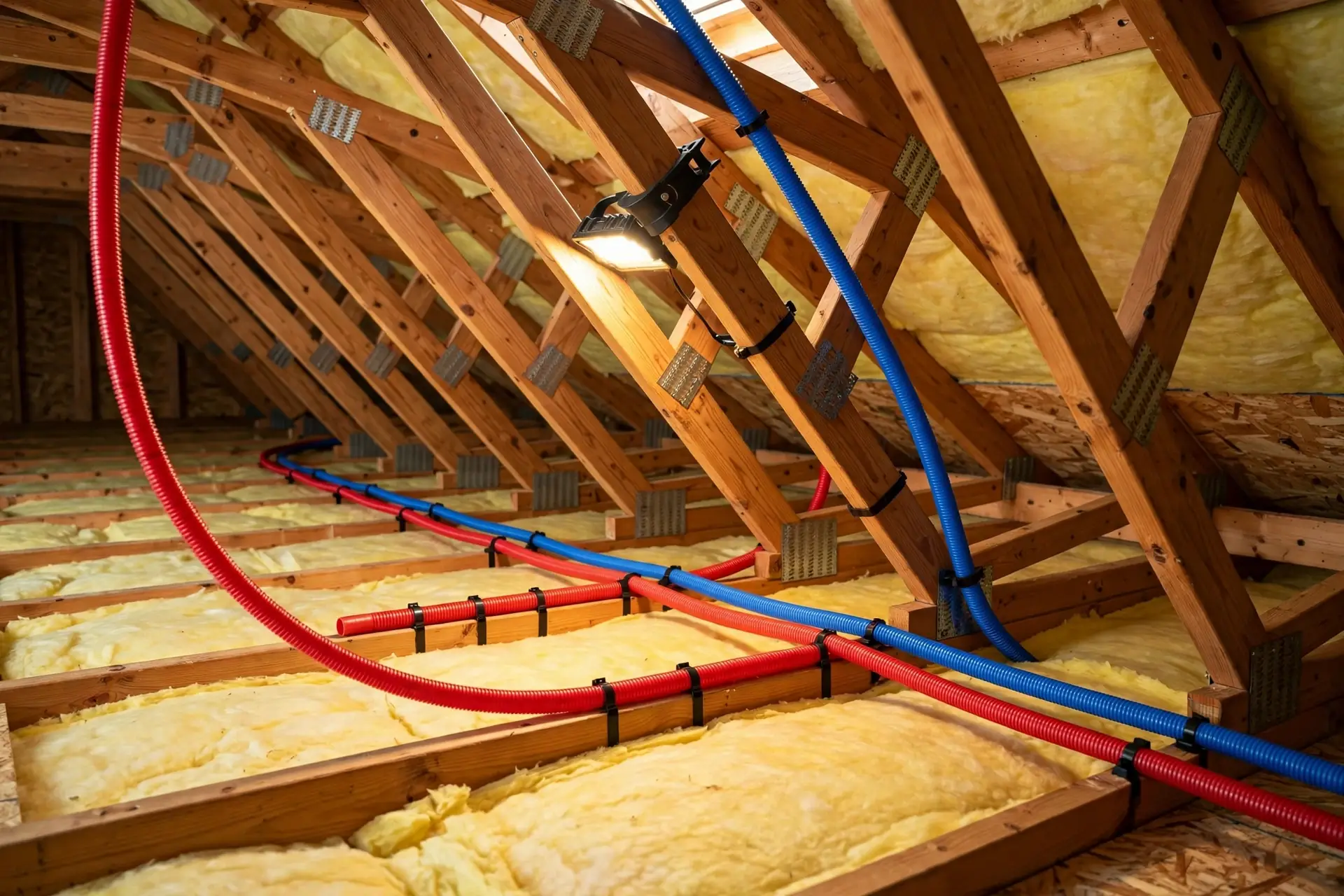
When the same under-slab line keeps leaking, patching it again is throwing good work after bad. A slab leak reroute in Litchfield Park abandons the failing line under the concrete and runs a brand-new water line overhead, through walls or the attic, to the fixtures it served. We connect you with experienced local pros who plan the route, handle the details per local rules, and explain each step before work begins.
Three things to know before you call:
- No more slab openings for that line. The old line is taken out of service and left in place; future leaks under the slab stop being your problem.
- A new line, start to finish. The replacement runs through accessible spaces, so any future work happens in a wall or attic, not in concrete.
- Planned around your home. The route is mapped to your layout first, with drywall openings kept small and patched afterward.
What Slab Leak Rerouting Means
Slab leak rerouting means giving up on the buried line entirely. Instead of opening the slab to reach a pipe that has already failed once, the pro runs a new line from the supply to the affected fixtures through the walls, ceiling or attic. The old under-slab section is disconnected and abandoned in place, and the new line takes over its job.
This is the standard answer to repeat leaks. One break can be a fluke; two or three on the same run mean the line itself is done. A reroute solves the problem at its root by removing the under-slab line from the equation, which is why pros recommend it when spot repairs stop making sense.
Pipe Reroute Through the Attic or Walls
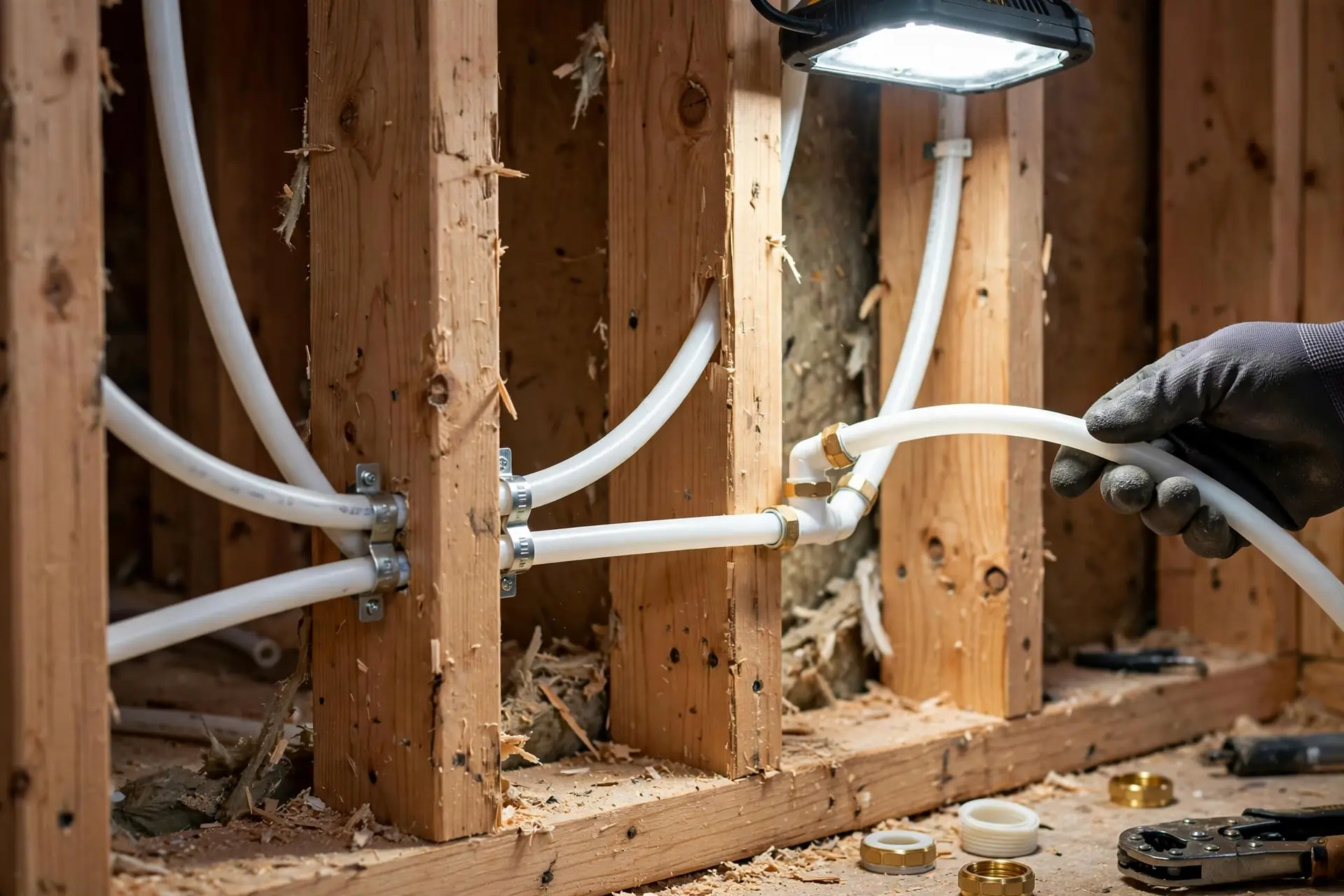
To reroute a water line after a slab leak, the pro maps the shortest practical path from the supply to the fixtures, usually up through a wall and across the attic, then down to each fixture the old line served. Modern flexible piping makes long, clean runs possible with far fewer joints than the old rigid line had. Where the path must pass through a finished wall, the pro opens only what the run requires.
The new line is secured, insulated where the layout calls for it, and pressure tested before walls are closed. A pipe reroute through the attic keeps the entire run accessible: if anything ever needs attention in the future, it happens in open space, not under concrete. That accessibility is a large part of what you are paying for.
Speak with a local slab leak techWhy a Reroute Avoids Opening the Slab for That Line
Every slab opening is disruptive: flooring comes up, concrete gets cut, dust gets everywhere, and a flooring pro has to finish the job afterward. A reroute trades all of that for small drywall openings that are patched when the plumbing is done. Once the new line is live, the slab never needs to be touched for that run again.
There is also a practical benefit for the rest of the system. The abandoned line is capped and taken out of service, so it can no longer leak under the slab. And because the new line runs through accessible space, any future maintenance or modification is straightforward work rather than a demolition project.
Drywall Access and Patching
Running a new line through finished walls means opening drywall at the points where the pipe enters, exits and turns. The pro keeps these openings as small as the work allows and plans them in logical spots, like inside closets or along runs that are easy to patch cleanly. You will know where the openings will be before work starts.
After the line is tested, the drywall openings are patched to a smooth, paint-ready surface as part of the job. Final painting and texture matching beyond the patch are typically finished by you or a painter, and the pro will explain exactly where that handoff is. Permits and inspections are handled per local rules, and the pro takes care of that side of the process.
When to Choose a Slab Leak Reroute in Litchfield Park
Choose a reroute when the under-slab line has leaked more than once, when detection shows the line is in poor shape along its length, or when you simply want the problem solved rather than managed. It is also the sensible choice when the leak sits under finished flooring you would rather not disturb, since the new line goes overhead instead.
If leaks are appearing on multiple lines rather than one, the conversation widens to a repipe after slab leak, which replaces the whole system at once. And if a warm floor and a constantly running heater point to the hot side, read up on hot water slab leak behavior first, since single hot-line reroutes are one of the most common reroute jobs. Either way, an honest pro lays out all three paths, spot repair, reroute and repipe, and helps you pick the one that fits your home.
Ask whether a reroute fitsLitchfield Park Homes: Why Attic Reroutes Fit Newer Slab Homes
The 1990s and 2000s subdivisions around Litchfield Park tend to have larger slab homes with real attic space above them, which makes overhead reroutes practical and clean. In these neighborhoods the supply lines often run long distances under big open floor plans, so abandoning a failing run and going over the top avoids tearing up large stretches of finished flooring.
In single-story homes the attic run is simple: up one wall, across, and down to the fixtures; two-story plans route through walls and chases instead. Whether you need slab leak repair in Indian School Road Area or slab leak repair in Litchfield Park City Neighborhoods, the reroute plan starts with your home's layout and ends with a new line that never touches the slab again.
Describe the problem, we connect youA slab leak reroute in Litchfield Park ends the cycle of patching the same failing line: one planned job, a new accessible water line, and a slab that never needs opening again. If you are on your second leak, or the first one sat under flooring you want to protect, call now and describe the situation. A local pro will map the route, explain each step, and handle the details per local rules.
Call (623) 283-3265 for a slab leak reroute in Litchfield ParkFrequently Asked Questions
A reroute abandons the leaking under-slab line and runs a brand-new water line to the affected fixtures through the walls, ceiling or attic. The old line is disconnected and capped in place, and the new line takes over its job. Once done, that run can never leak under the slab again because it no longer runs under the slab.
For a single leak on a sound line, spot repair is usually the simpler answer. Rerouting is better when the same line has leaked more than once, when the line shows its age along its length, or when the leak sits under finished flooring you want to protect. An honest pro recommends based on the line's condition, not the job size.
Typically up through a wall, across the attic, and back down to each fixture the old line served. The pro maps the shortest practical path through your home's layout before work starts. Modern flexible piping allows long clean runs with few joints, and the whole route stays accessible for any future work.
Yes, at the points where the new line enters, exits and turns inside finished walls. The openings are kept as small as the work allows and planned in sensible spots. After the line is pressure tested, the drywall is patched to a smooth, paint-ready surface as part of the job.
No. The new line is sized to serve the fixtures properly, and it is pressure tested before walls are closed. Most homeowners notice no difference at the tap. If anything, removing a corroded old line from the equation can only help flow stay consistent.
No. A reroute replaces only the failed run, or the specific lines in the plan, and the rest of your plumbing stays exactly as it is. The abandoned section is capped and the new line takes over its job. If several lines are failing at once, that is when a whole-home repipe becomes the conversation instead.
Permits and any required inspections are handled per local rules, and the pro takes care of that side of the process. You do not need to research the requirements yourself. Ask on the call how it works for your specific job and you will get a straight answer.
No. The old line is disconnected from the water supply and capped, so no water flows through it anymore and it cannot leak. It simply stays buried in place, harmless. This is standard practice and the reason a reroute permanently ends leaks on that run.
Slab Leak Reroute in Litchfield Park: talk to a local pro today
Ask whether your home suits a reroute and get connected with a local pro. Calls answered 24/7.
Ask about a rerouteCall (623) 283-3265.