Litchfield Park, AZ
Signs of a Slab Leak in Litchfield Park
Meter, bill, sound, warm tile: what each clue tells you.
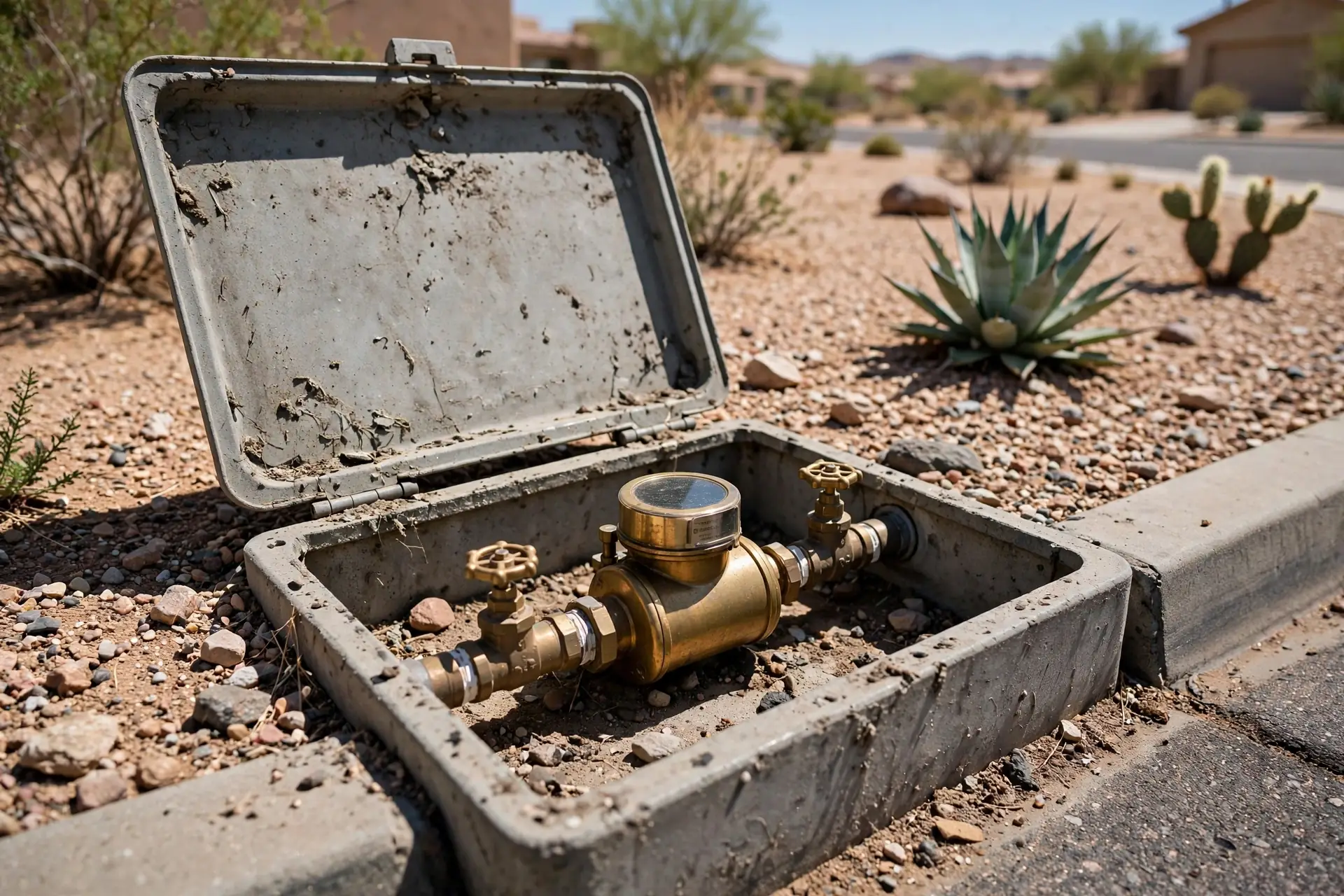
The most common signs of a slab leak that Litchfield Park homeowners notice are a sudden jump in the water bill, the sound of running water when nothing is on, and a warm or damp spot on the floor. One sign alone can have another cause, but two or more together are worth a professional look.
We connect Litchfield Park callers with experienced local pros who confirm what is really happening before anyone talks about repairs. Call and describe what you are seeing; you will get a straight answer on whether it sounds like a slab leak, with no pressure and no invented urgency.
The First Signs of a Slab Leak in Litchfield Park: Meter, Bill and Sound
Your water meter is the most honest witness in the house. Turn off every tap, appliance and irrigation zone, then watch the meter for fifteen minutes: if the dial or the small flow indicator keeps moving, water is going somewhere it should not. A second reading after a quiet couple of hours confirms it, and that pair of numbers is the single most useful thing you can bring to the call. These meter, bill and sound clues are the signs of a slab leak that Litchfield Park homeowners catch first, and the meter test is the one that counts.
The bill often tells the story before you do. A spike with no change in routine, no houseguests and no new landscaping watering, points to a hidden leak rather than heavier use. A high water bill leak is the clue most homeowners notice first, so compare the current bill against the same months last year if you can; a slab leak shows up as a jump, not a gradual climb.
Sound is the third early clue. Stand in a quiet house and listen at the floor: a faint hissing or rushing sound with every fixture off suggests water moving under the slab. It is easy to miss during a busy day, which is why many homeowners first notice it late at night.
Slab Leak Symptoms at the Floor, Walls and Baseboards
Slab leak symptoms show up where the escaping water meets your finishes. Tile or stone may feel warm in one spot on a hot-side leak, or damp and cool on a cold-side leak. Laminate and wood-look flooring can cup, buckle or separate at the seams as moisture works up from below, and carpet may feel spongy in one area while the rest stays firm.
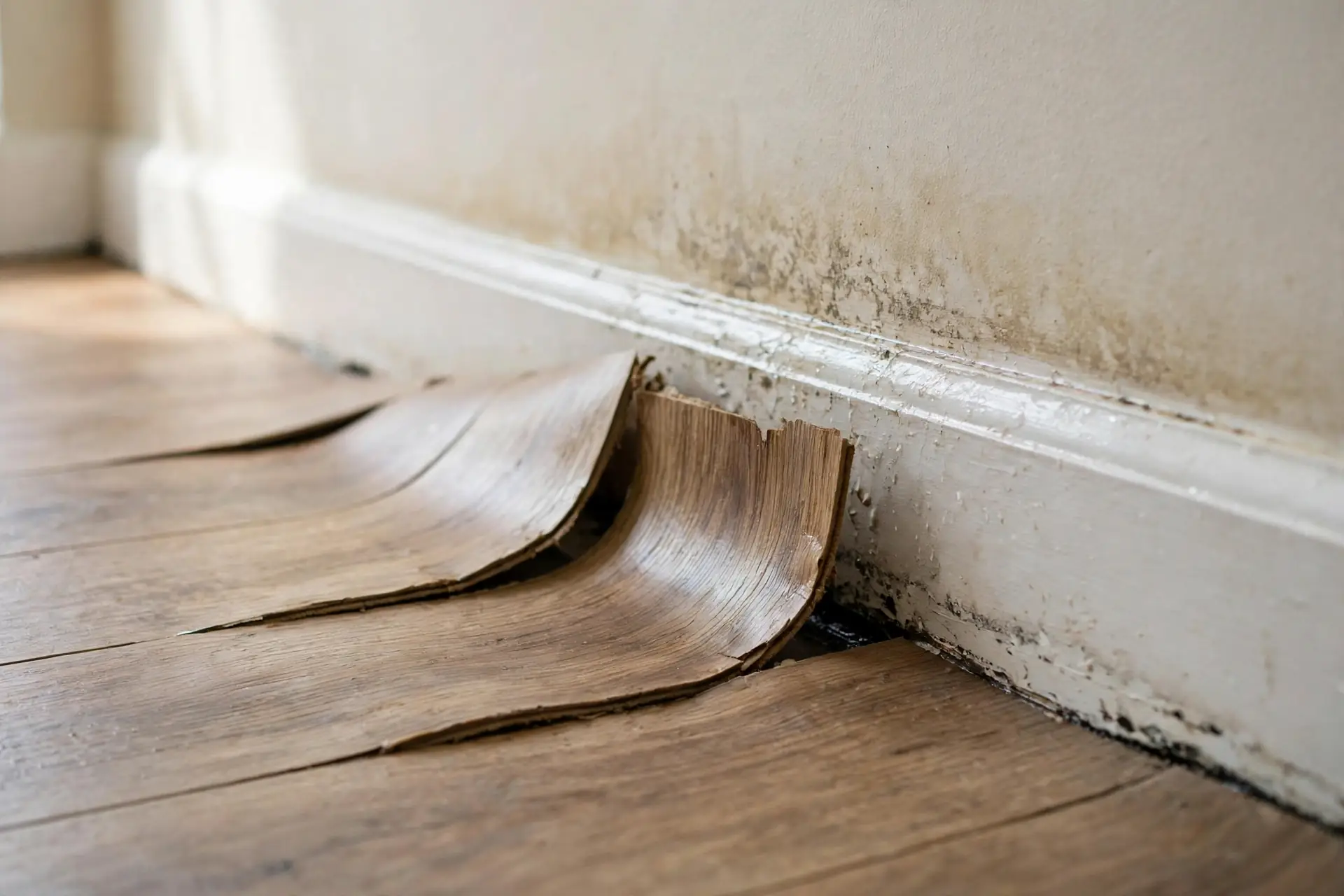
Baseboards tell on leaks too: paint that bubbles, wood that swells or darkens, or a faint line of staining along the bottom of a wall. In bathrooms and kitchens the signs sometimes hide behind the toilet base or under the vanity, so look low and look closely. A musty smell in a room with no obvious source is another nudge to investigate, since persistent dampness feeds odor long before it shows.
Hairline cracks in tile grout or a slab-adjacent patio can appear when soil under the slab shifts from long-term moisture, but cracks alone prove nothing. Treat every floor and wall clue as a reason to check, not a diagnosis, because several ordinary household leaks leave the same marks.
Hear Water Running Under Floor? What That Sound Means
To hear water running under floor surfaces when the house is silent usually means pressurized water is escaping somewhere in the system. On a slab home the prime suspect is a supply line under the concrete, but the sound alone cannot tell you which line or exactly where. That is the job for acoustic listening equipment, which turns a vague rushing noise into a marked spot on the floor.
Before you worry, rule out the ordinary sources: a toilet with a worn flapper refills in cycles and can sound like a distant leak, and a water softener or filtration unit regenerating at night makes water noise on a schedule. If the sound is constant rather than cyclical, and every fixture is truly off, the case for a slab leak gets stronger.
Note when you hear it, where in the house it is loudest, and whether it changes when you shut off the main valve. Those three details save the pro real time on arrival.
Outdoor Clues Near the Foundation
Water escaping under a slab sometimes shows itself outside first: a persistently damp strip of soil along the foundation, greener grass in one patch, or water seeping up through expansion joints in a patio or walkway. After a monsoon-season rain these signs are easy to dismiss, so watch for the ones that linger long after everything else dries.
Keep the mimics in mind. In the subdivisions, a stuck irrigation zone or a broken sprinkler head can soak a foundation edge and look exactly like a leak from below. The meter test sorts it out: irrigation runs on a schedule and stops when the zone is off, while a slab leak keeps the meter turning no matter what you switch off.
When It Is Not a Slab Leak
Plenty of household problems wear a slab leak's costume. A toilet with a failing flapper can waste as much water as a real leak and spike the bill just as hard. A dripping water heater relief valve, a sweating cold-water line in a humid garage, or condensation from the air conditioner can all leave damp spots that look alarming and mean something routine.
Getting the diagnosis right matters here: not every hidden leak is a slab leak, and guessing wrong sends the repair in the wrong direction. A visit for slab leak detection settles the question with a meter test, acoustic listening and thermal imaging instead of assumptions. If the tools say the lines under the slab are sound, the pro will say so, and you can chase the real culprit with confidence.
What to Do Next
Start with the meter test and a short note of everything you have observed: bill changes, sounds, warm or damp spots, and when each began. That note turns a vague worry into a useful briefing the moment you call.
Then call. Describe the clues in your own words and let a local pro decide what the next step should be, whether that is a detection visit or a simpler fix entirely. You will get a straight answer on the phone.
Litchfield Park Homes and Where Signs Show Up
The original city is mostly 1960s to 1980s single-story ranches with copper lines under the slab at an age where leaks get more likely, so bill spikes and warm spots are the calls that come from these streets most often. Tile floors, common in these homes, make warm and damp patches easy to feel underfoot, which is why homeowners here tend to catch hot-side leaks early.
The historic core near the center holds the oldest and most varied housing, where past repairs and additions complicate the picture: a damp baseboard there might trace to old plumbing, old patching, or both. The 1990s to 2000s subdivisions around the city have longer pipe runs and more irrigation, so outdoor damp spots need the meter test to separate a stuck sprinkler zone from a real under-slab leak. Hard water and shifting desert soils stress lines across all of these areas in general, background ways.
Every Litchfield Park neighborhood is covered. For the 1960s to 1980s ranch streets, see slab leak repair in Litchfield Park City Neighborhoods; for the older streets near the center, slab leak repair in Old Litchfield Park covers the historic core.
Two or more signs of a slab leak that Litchfield Park pros would recognize are reason enough to call. Reach (623) 283-3265, describe what you found, and get a straight answer on what comes next.
Frequently Asked Questions
Most homeowners notice a higher water bill, the sound of running water with everything off, or a warm or damp spot on the floor. Any one of these deserves a meter test: if the meter moves with all water off, something is leaking. Two or more signs together are a strong reason to call a pro.
Long-term moisture under a slab can shift the soil and contribute to hairline cracks in grout, tile or nearby concrete, but cracks alone do not prove a leak. Settling and temperature movement crack concrete too. Treat cracks as one clue among several, not a diagnosis by themselves.
A hidden leak is the usual suspect when the bill jumps but your routine has not changed. Toilets with worn flappers and irrigation problems can do it too, so run the meter test with everything off. A moving meter points to a real leak somewhere in the system.
Yes, and it fools people regularly. A toilet with a failing flapper refills on a cycle, which spikes the bill and can even sound like running water under the floor. Dye in the tank is a quick home check: if color reaches the bowl without a flush, the toilet is the culprit, not the slab.
Pressurized water escaping somewhere in the system makes that sound, and on a slab home an under-slab supply line is a candidate. Rule out cyclical sources first, like a refilling toilet or a softener regenerating. A constant sound with everything off is worth a professional listen with acoustic equipment.
Persistent moisture under flooring or behind baseboards can support musty odors and visible growth over time. Only a professional inspection can say what is growing and where the moisture comes from. The practical step is the same either way: find the leak, stop the water, and dry the area properly.
No. A pinhole may seem to slow down, but water under pressure keeps escaping until the line is repaired or bypassed. If the signs fade, run the meter test again before you assume the leak is gone.
Do the meter test and call promptly rather than watching and waiting. A confirmed leak does more damage to flooring the longer it runs, while a false alarm takes nothing but a phone call. Early detection keeps every option on the table.
Signs of a Slab Leak in Litchfield Park: talk to a local pro today
Tell the pro which signs you have noticed and get a straight read on them. Calls answered 24/7.
Describe the signs you seeCall (623) 283-3265.