Litchfield Park, AZ
Whole-Home Repipe After a Slab Leak in Litchfield Park
When leaks keep coming back, new lines overhead end the cycle from the old ones.
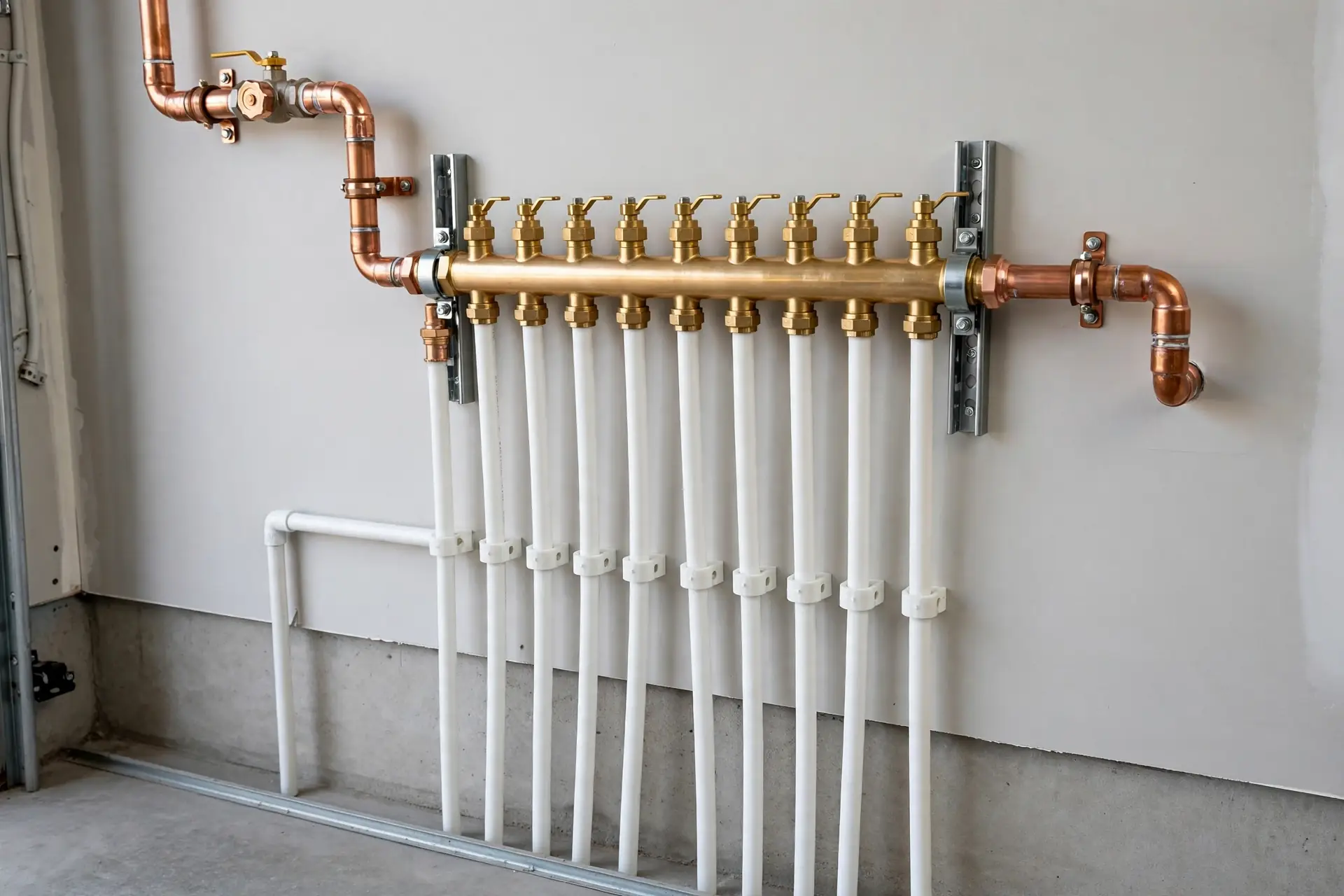
Whole-Home Repipe: The Short Version
Some Litchfield Park homeowners stop chasing one leak after another and replace the whole under-slab supply system instead. Here is the short version:
- A repipe abandons the old pipes beneath your slab and runs new supply lines through walls and the attic.
- It is the option most homeowners weigh seriously after a second or third leak in the same system.
- You get one planning visit, a clear written scope, and a home that no longer depends on aging pipe under concrete.
A repipe that Litchfield Park homeowners choose after a slab leak is not another repair, it is a fresh start for the plumbing. When the same under-slab lines keep springing leaks, patching one spot leaves the rest of the aging system in place, waiting for its turn.
We connect Litchfield Park callers with experienced local pros who plan and install whole-home repipes for slab houses. One call gets you a straight answer on whether a repipe fits your situation.
When Repeat Leaks Point to a Whole House Repipe
The first slab leak feels like bad luck. The second one in the same system starts a pattern, and by the third, the pattern points to the whole system. Each spot repair opens the slab in one place while the rest of the pipe keeps aging under the same soil and water conditions.
A whole house repipe makes sense when the problem is the system, not the spot. That usually means two or more leaks in the under-slab supply lines, water with visible discoloration at several fixtures, or pressure that keeps dropping no matter how many sections get patched. A local pro can read these clues during a visit and tell you honestly whether the next repair is likely your last one or just the latest one.
If you are still confirming what is happening under your floor, read the signs of slab leak first, because a repipe only earns its place once an under-slab supply leak is confirmed and the pattern is clear. Acting on one confirmed leak is a repair; acting on a failing system is a plan.
PEX Repipe After Leaks: What Your New Lines Look Like
A pex repipe after leaks moves your water off the slab and onto modern flexible tubing run through walls, ceilings and the attic. The new lines connect to your existing fixtures from above or behind, so the concrete never needs to be opened again for a supply leak. Homeowners usually notice steadier pressure and cleaner water at the tap once the old under-slab runs are out of service.
Copper is the other common choice, and both materials do the same job of getting your supply lines out from under the slab. The decision usually comes down to the layout of your home, how the pro plans to route each run, and what fits the way the house is built. There is no universal right answer, which is why the planning visit matters more than the material debate.
Hot-side failures are a frequent reason homeowners stop repairing and start replanning; a hot water slab leak keeps the water heater working overtime and the meter turning until that line is replaced or rerouted. When the hot side is the repeat offender, a repipe lets the pro design the new hot runs with shorter, cleaner paths than the slab ever allowed.
Repipe a Slab House: New Routes Through Walls and Attics
To repipe a slab house, the pro maps every fixture, then runs new lines up through walls and across the attic instead of under the concrete. Drops come down inside walls to reach sinks, toilets, showers and the water heater, and the old under-slab pipes are simply capped and left where they are. Your floors stay untouched, which is the whole point of the project.
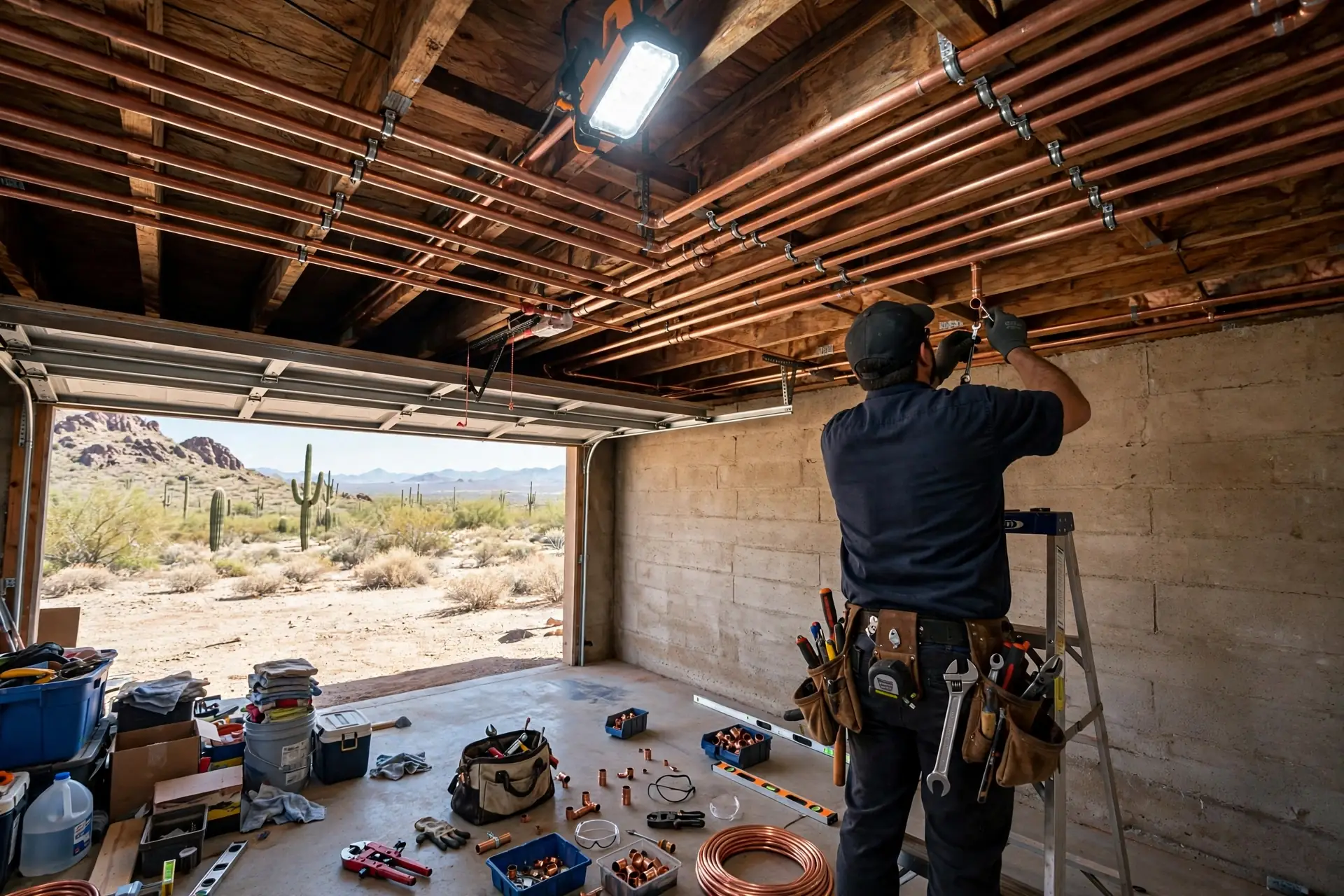
Single-story ranches, common in the original city, suit a repipe slab house plan well because the attic sits right above every room. A tidy layout keeps the new runs short and the drywall openings small, usually a neat square at each drop point that gets patched and textured after the lines are in. Two-story or split areas of a home take more planning, but the principle is the same: new lines overhead, old lines retired.
The plan also covers where the main line enters and how the new system ties into it. Everything the pro intends to open, move or patch should be on the written scope before work starts, so there are no surprises halfway through the job.
What the Repipe Process Looks Like, Step by Step
The visit starts with a walkthrough: the pro checks every fixture, finds the cleanest routes, and marks where small openings will go. Then the plan is explained in plain language, including which walls open, where the new manifold or trunk lines sit, and what the patching covers when the pipe work is done. Every repipe that Litchfield Park homeowners approve after a slab leak starts with that written scope, so nothing is assumed.
On work days, water is shut off in sections rather than for the whole house at once, so you are rarely without water for long stretches. The crew runs the new lines, connects each fixture, caps the old under-slab runs, and pressure-tests the new system before anything gets closed up. Patching and texture follow the pipe work, and the final walkthrough covers every fixture so you can see and feel the result.
Planning Around Daily Life While the Work Happens
Most families stay in the home during a repipe. The noisy cutting and drilling happens in defined windows, and the pro can usually sequence the work so you have working bathrooms and a kitchen sink for most of each day. If you work from home, mention it on the call so the noisiest steps can be planned around your schedule.
A little preparation smooths the whole job: clear the path to the water heater, move items away from walls where openings are planned, and keep the attic hatch accessible if the crew needs it. Pets do better in a closed room away from the work areas, and it helps to know where your main shut-off is before the first day, just in case.
Dust is part of any project that opens drywall, even a careful one. The crew contains the work areas and cleans up daily, and the patching stage restores the openings so the only thing left is fresh paint where you want it.
Litchfield Park Homes and Why Repipes Come Up Here
Litchfield Park is nearly all slab construction, and the original city holds 1960s to 1980s single-story homes where copper has been running under concrete for decades. At that age, one leak often introduces the next, and homeowners in these ranches are the most common callers asking whether a repipe beats another round of patching. The mature trees and settled lots add their own slow movement to the soil under those slabs.
The 1990s to 2000s subdivisions around the original city tell a different story: larger homes with longer pipe runs, copper in many of them and PEX in the later builds. A leak in a long under-slab run here can travel farther before it shows, which is why detection matters so much in these neighborhoods. Hard water and shifting desert soils stress lines across every era, in general ways rather than on any schedule.
Service spans the whole city. North-side homeowners can read about slab leak repair in Camelback Road Area, and the south-side subdivisions are covered under slab leak repair in Indian School Road Area. Wherever you are in Litchfield Park, the pro who answers knows these house types and plans the repipe to match.
If patching has stopped working, a repipe that Litchfield Park pros plan properly can end the cycle for your home. Call (623) 283-3265 for a straight answer on your situation before anything is scheduled.
Frequently Asked Questions
Two leaks in the same under-slab system are a strong hint the pipe itself is failing, not just one unlucky spot. A local pro can look at the leak locations, the pipe material and the home's age, then tell you honestly whether a third repair is likely. That visit is the right moment to compare a repipe against another patch.
The schedule depends on the size of the home, the number of fixtures and how the new lines need to route. A single-story ranch usually moves faster than a larger or two-story layout. When you call, describe your home and the pro can walk through the usual sequence for a house like yours.
No. Openings are planned at specific drop points where new lines come down to fixtures, and the pro marks them before work starts. Most walls are never touched, and the openings that are made get patched and textured. The written scope should list every planned opening.
Both get your supply lines out from under the slab, which is the real goal. The better pick depends on your home's layout, the routing plan and how the attic and walls are built. Ask the pro to explain the trade-offs for your specific house rather than choosing on material reputation alone.
Most families do. Water is shut off in sections rather than all at once, and the crew sequences the work to keep bathrooms and the kitchen usable for most of each day. If you work from home, say so on the call so the noisiest steps can be planned around your day.
A repipe that Litchfield Park pros install removes the under-slab supply lines, so those lines can no longer leak under the slab. That is the honest scope of what it does. No plumbing project can promise nothing will ever fail elsewhere, but retiring the old under-slab system ends the repeat-leak cycle it was causing.
That depends on the scope of the work and the city's requirements for your address. The pro handling the job can tell you what paperwork applies and whether they handle it. Ask about it on the call so it is settled before the first wall is opened.
Each opening is patched, taped and textured to blend with the surrounding wall. The goal is a surface ready for paint, not a visible scar. Confirm patching is in the written scope before work begins so nothing is left unfinished.
Repipe After a Slab Leak in Litchfield Park: talk to a local pro today
Share your leak history and get connected with a pro who plans repipes. Calls answered 24/7.
Ask about a repipeCall (623) 283-3265.